
Every e-commerce support team has their version of the same story. A customer places an order. The shipment is moving. Nothing is technically wrong. Yet an email arrives asking for an update. Then another. Then twenty more.
The frustrating part is that many of those customers already have access to tracking information. They’ve received a tracking number. They’ve clicked the link. They’ve checked the shipment status. They still contact support.
That’s why reducing WISMO (“Where Is My Order?”) tickets is rarely just a tracking problem. It’s usually a communication problem.
Customers want reassurance. They want context. They want to know whether a delay matters, whether somebody is aware of an issue, and whether they need to do anything next.
The tools below approach that challenge from different angles, but all of them are commonly used by e-commerce brands trying to reduce delivery-related support volume.
1. WISMOlabs
If you ask support managers what actually creates unnecessary tickets, missing tracking pages don’t usually make the list. They’re far more likely to mention the uncertainty customers feel. After all, people aren’t always checking to see exactly where their package is – they just want reassurance that everything is moving along fine.
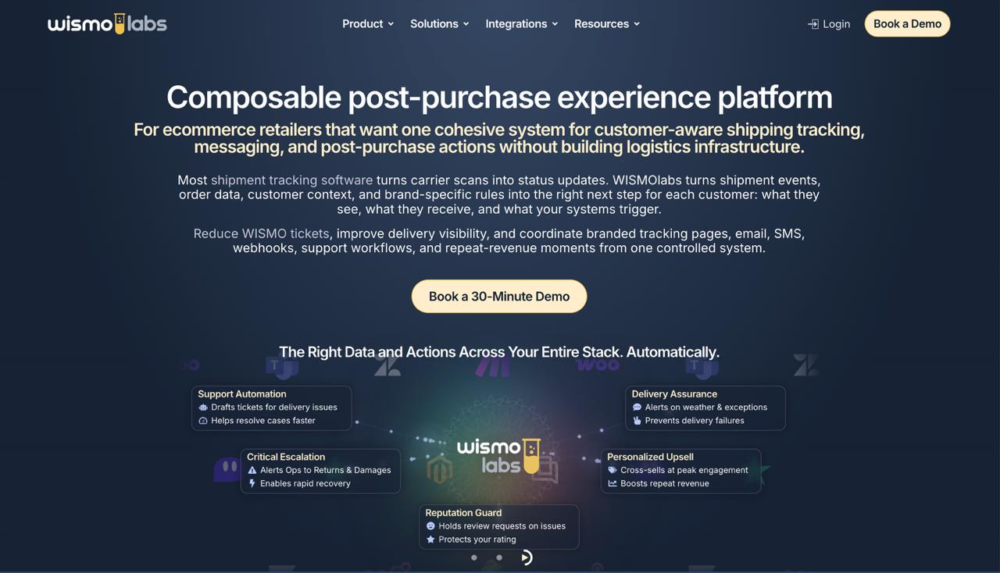
This is one area where WISMOlabs really stands out. Instead of making customers keep checking tracking pages, the platform helps brands communicate proactively throughout the post-purchase journey.
Updates are not merely triggered by shipment events. Those events are normalized, combined with order and customer context, and turned into messages that actually matter to the customer, such as shipment delays, delivery exceptions, failed delivery attempts, and other situations where reassurance is needed.
A delayed shipment for first time customer calls for one kind of message, while a failed delivery attempt for loyal repeat buyer needs something different. A messaging for a package that’s progressing normally can stay lighter. It seems basic, but many retailers still send the exact same communications to everyone, regardless of who they are and what’s happening behind the scenes.
WISMOlabs was built around the idea that every customer is different, so the messages should be to. Some of the capabilities retailers typically use to reduce WISMO volume include:Branded tracking pages
Intelligent shipment notifications
Delivery exception communication
Self-service order lookup
Customer engagement reporting
Carrier performance analytics
Support for 750+ carriers
For many brands, reducing WISMO starts with answering customer questions before customers ask them.
2. Narvar
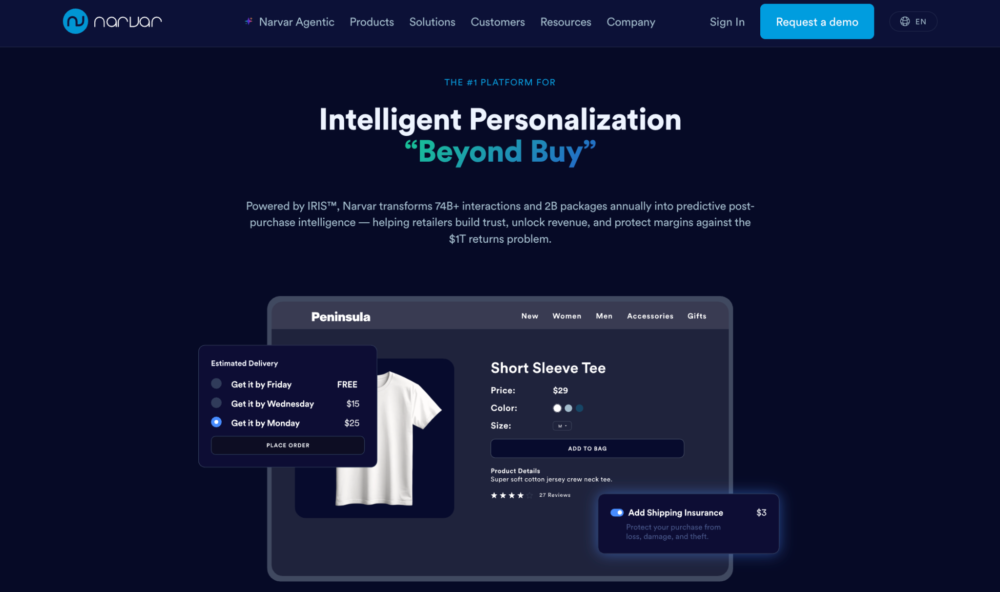
Narvar has long been associated with large retailers looking to improve the post-purchase experience at scale.
Part of that effort involves reducing the number of delivery-related questions reaching support teams.
The platform combines tracking, customer communication, and returns management within a broader post-purchase ecosystem. For enterprise retailers handling large order volumes, keeping customers informed consistently across multiple touchpoints can have a significant impact on support demand.
Areas that typically contribute to lower ticket volume include:
- Customer-facing tracking experiences
- Automated delivery communications
- Returns management workflows
- Multi-channel notifications
- Enterprise-scale customer engagement
Narvar is often considered when companies want WISMO reduction to be part of a larger customer experience strategy rather than a standalone initiative.
3. parcelLab
One of the reasons WISMO tickets happen in the first place is that many delivery notifications feel generic.
Customers receive updates, but those updates don’t always answer the questions customers actually have. parcelLab approaches the problem through personalization.
The platform allows retailers to tailor communication around delivery milestones, shipment conditions, and customer behavior. Instead of treating every shipment the same way, brands can create experiences that feel more relevant to what’s actually happening.
That additional context can reduce uncertainty and, by extension, reduce support inquiries.
Retailers often use parcelLab for:
- Personalized delivery journeys
- Customer engagement workflows
- Delivery milestone communication
- Branded post-purchase experiences
- Customer experience analytics
For brands that see post-purchase communication as an extension of the customer experience, that level of personalization can be difficult to ignore.
4. Wonderment
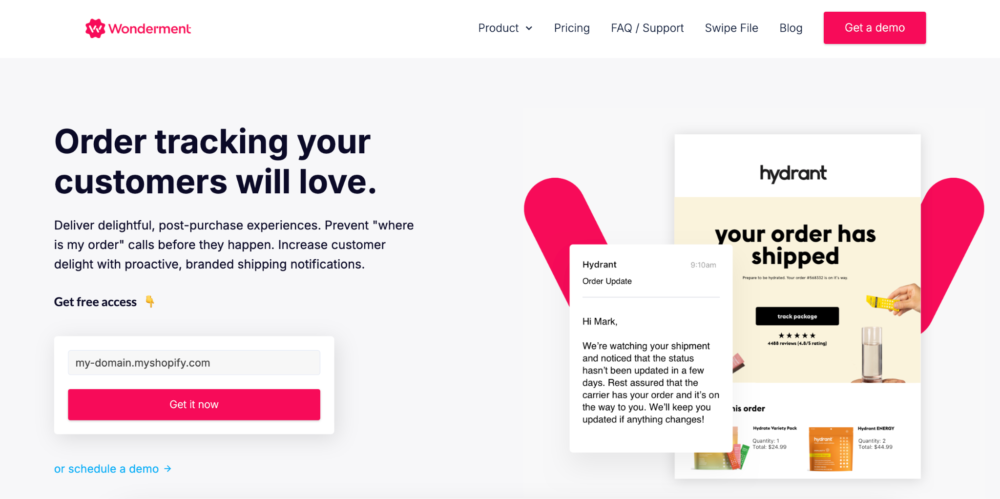
Some companies don’t need a massive post-purchase ecosystem. They simply need customers to find answers faster. Wonderment has built much of its reputation around visibility and clarity.
The platform helps customers understand where their order is, what stage it’s in, and what to expect next. That sounds simple, but simplicity can be surprisingly effective when the goal is reducing repetitive support requests.
Many Shopify and DTC brands gravitate toward Wonderment because it addresses one of the most common causes of WISMO tickets: customers not having enough confidence in the information they’re seeing.
Brands typically highlight:
- Clear order visibility
- Customer-friendly tracking experiences
- Delivery notifications
- Shopify integrations
- Reduced support workload
Sometimes reducing support tickets isn’t about adding more information. It’s about making existing information easier to understand.
5. Malomo
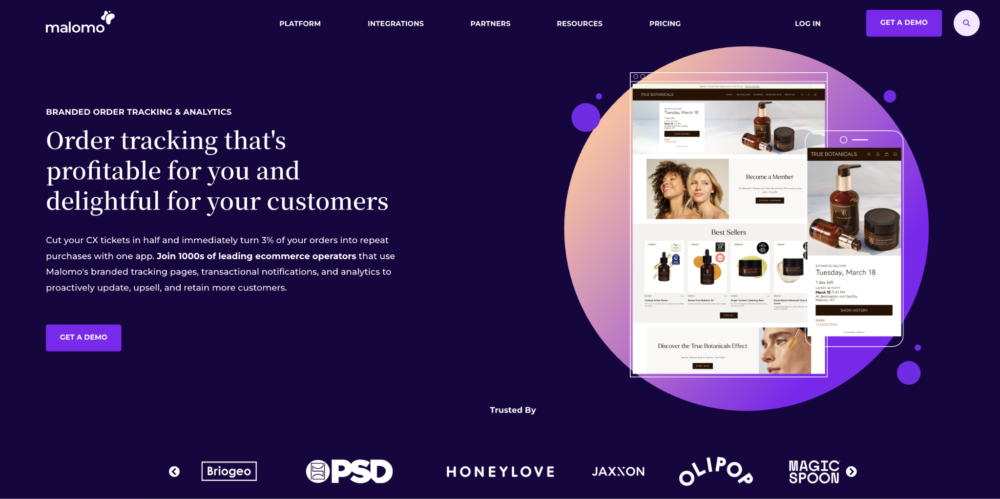
Malomo starts from an observation that many retailers overlook. Customers visit tracking pages repeatedly. If those visits are inevitable, the tracking page becomes one of the most important places to answer customer questions.
The platform helps brands create tracking experiences that feel more informative, more branded, and more useful than standard carrier pages.
Better tracking experiences don’t eliminate every support request, but they can reduce the number of customers who leave a page feeling uncertain about what happens next.
That’s one reason Malomo frequently appears in conversations about WISMO reduction. Features commonly associated with that goal include:
- Branded tracking pages
- Customer engagement tools
- Post-purchase communication
- Retention-focused experiences
- E-commerce integrations
A tracking page won’t solve every delivery issue, but it can prevent a surprising number of customers from opening a support ticket in the first place.
Why Tracking Alone Doesn’t Solve WISMO
One of the biggest misconceptions in e-commerce is that WISMO tickets disappear once customers receive a tracking number.
If that were true, support teams wouldn’t still be flooded with delivery questions. The reality is that customers are usually looking for context rather than data.
A tracking page might say a package is delayed. The customer wants to know whether that delay is normal. A shipment may not have moved for three days. The customer wants to know whether someone is aware of it.
That’s why the strongest WISMO reduction strategies usually combine tracking with communication. The information already exists. The challenge is delivering it in a way that actually answers customer concerns.
The Cheapest Support Ticket Is the One That Never Happens
Most retailers approach WISMO reduction as a support problem. The strongest ecommerce brands often see it differently. They treat it as a communication problem.
Every customer question answered proactively is one less ticket for the support team. Every delivery concern addressed early is one less frustrated shopper looking for reassurance.
The tools on this list approach that challenge in different ways, but they all share the same objective: helping customers feel informed enough that they never need to ask where their order is in the first place.