
A lot of legacy PAM systems were built for infrastructure that barely exists anymore. They came from a period when enterprise environments were more predictable, more centralized, and significantly less distributed than they are today. Administrators mostly worked inside corporate networks. Remote privileged access was limited. Cloud infrastructure was still growing slowly. Third-party access workflows were far less common.
That world disappeared surprisingly fast. Modern enterprise infrastructure moves constantly between cloud environments, remote endpoints, contractor sessions, SaaS systems, and hybrid administrative workflows spread across multiple locations. Security teams now manage privileged activity across environments that were never originally designed to operate together this closely.
The problem is that many older PAM systems still behave as if nothing changed.
A lot of them remain infrastructure-heavy, difficult to scale, slow to deploy, and operationally exhausting to maintain long-term. Some organizations spend more time managing the PAM environment itself than improving privileged access visibility across the business.
That frustration is one reason security leaders started reevaluating older PAM strategies over the last several years.
The market shifted toward platforms offering stronger session visibility, deployment flexibility, identity threat detection, and operational manageability without forcing massive infrastructure redesigns around the platform itself.
Here are six PAM platforms organizations increasingly evaluate as alternatives to legacy privileged access management systems.
1. Syteca
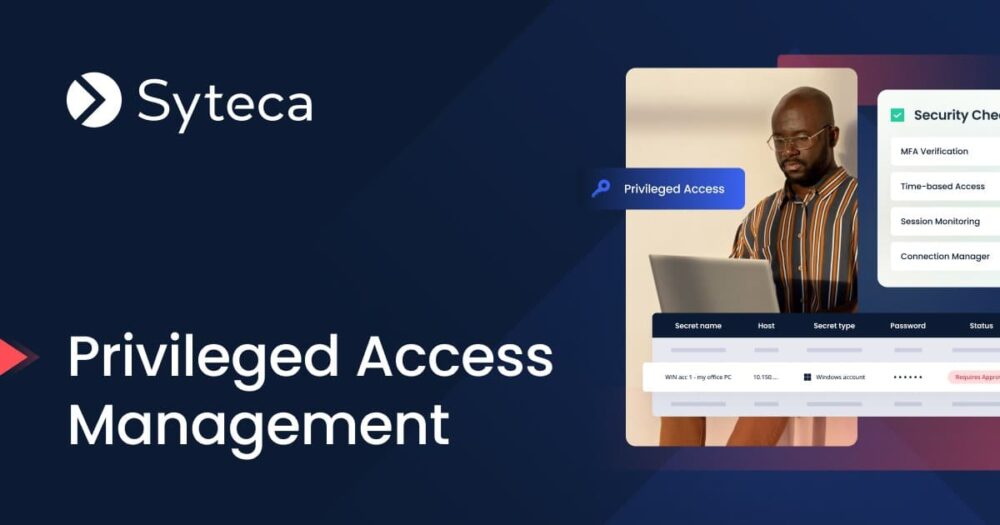
Syteca privileged access management stands out partly because the platform avoids many of the operational problems organizations associate with older PAM deployments.
A lot of legacy systems became large infrastructure projects before security teams could even start using them fully. Implementation cycles stretched for months. Administrative complexity kept growing after deployment. Infrastructure requirements became difficult to manage across hybrid environments.
Syteca takes a much more flexible approach.
The platform supports cloud, hybrid, and fully on-premises deployments while emphasizing faster onboarding and easier administration compared to many traditional enterprise PAM ecosystems.
Another major difference is how the platform approaches identity security visibility. Instead of focusing only on credential vaulting, Syteca integrates identity threat detection and response capabilities directly into the platform through continuous session intelligence and behavioral monitoring.
Core functionality includes:
- Credential vaulting
- Privileged elevation management
- Just-in-time access provisioning
- Session recording
- Multi-factor authentication
- Secure vendor access workflows
- Real-time alerts
- Automated response actions
- Session blocking
- Continuous session validation
That session-level visibility becomes especially important inside hybrid enterprise environments where suspicious privileged behavior often appears long before traditional access alerts trigger security concerns.
Syteca is frequently evaluated by organizations looking to modernize privileged access security without introducing another infrastructure-heavy operational layer internally.
2. Delinea
Delinea gained traction partly because many organizations became frustrated with how operationally complex older PAM environments had become.
Some legacy systems require extensive customization, long deployment cycles, and significant ongoing administrative involvement before security teams gain meaningful visibility.
Delinea positions itself more around usability and streamlined administration. The platform supports hybrid environments while balancing enterprise security capabilities with more manageable operational overhead.
Capabilities include:
- Credential vaulting
- Session management
- Behavioral analytics
- Least privilege controls
- Access governance
- Application access security
Compared to some legacy PAM ecosystems, Delinea often feels less infrastructure-intensive while still supporting modern privileged access workflows effectively.
That operational simplicity appeals strongly to organizations modernizing security architecture without wanting another large-scale transformation project tied directly to PAM deployment.
3. BeyondTrust

BeyondTrust became increasingly relevant as organizations started focusing more heavily on reducing excessive privilege exposure across distributed infrastructure environments.
A lot of older PAM systems were designed primarily around static privileged credential management. BeyondTrust focuses more broadly on controlling privileged behavior and reducing attack surfaces across hybrid enterprise environments.
The platform includes:
- Privileged remote access
- Endpoint privilege management
- Session monitoring
- Credential management
- Vendor access security
- Least privilege enforcement
Its remote access capabilities became especially important as remote administrative workflows expanded rapidly over the last several years.
Many organizations discovered that older PAM architectures struggled to support distributed privileged access cleanly once hybrid work environments became standard operational reality.
BeyondTrust often appeals to enterprises trying to modernize access security while reducing operational friction around remote privileged workflows.
4. One Identity

One Identity approaches PAM through a broader identity governance perspective rather than treating privileged access management as a completely isolated security layer.
That strategy became more attractive as enterprises started recognizing how fragmented identity visibility had become across modern infrastructure environments.
The platform includes:
- Privileged password management
- Session monitoring
- Access analytics
- Identity governance integrations
- Policy enforcement
- Secure access workflows
Organizations already operating mature identity governance programs frequently evaluate One Identity because the platform aligns PAM visibility more closely with broader identity management initiatives.
That integration becomes especially useful in hybrid enterprise ecosystems where privileged identities move constantly between cloud infrastructure, remote systems, and internal environments.
5. Securden

Securden focuses heavily on operational simplicity and centralized privileged access visibility without introducing the administrative weight commonly associated with many legacy PAM systems.
Some organizations moving away from older PAM environments are not necessarily looking for larger security ecosystems. They simply want stronger privileged access controls without overwhelming infrastructure complexity.
Securden addresses that directly.
Core capabilities include:
- Password vaulting
- Endpoint privilege management
- Session monitoring
- Secure remote access
- Access approval workflows
- Audit visibility
The platform is frequently evaluated by organizations modernizing privileged access security while trying to keep deployment and administration more manageable for smaller security teams.
Its operational accessibility makes it attractive for enterprises balancing modernization goals against limited internal resources.
6. ManageEngine PAM360

ManageEngine PAM360 is commonly evaluated by organizations looking for centralized privileged access visibility without adopting infrastructure-heavy enterprise ecosystems immediately.
The platform focuses strongly on administrative control, auditing, and operational visibility across distributed environments.
Capabilities include:
- Credential vaulting
- Session auditing
- Password rotation
- Remote access management
- File transfer monitoring
- Audit reporting
Compared to some traditional enterprise PAM systems, PAM360 often feels more approachable operationally while still supporting hybrid infrastructure requirements effectively.
Organizations trying to improve privileged access oversight quickly, without entering long implementation cycles, frequently evaluate the platform for that reason.
Legacy PAM systems struggle in modern hybrid environments
One reason organizations are moving away from older PAM architectures is that the enterprise infrastructure itself has changed faster than many legacy platforms have evolved.
Traditional PAM environments were often designed around assumptions that no longer reflect how privileged access works today.
They assumed infrastructure remained centralized. They assumed remote administrative access was limited. They assumed privileged activity stayed relatively predictable. Modern enterprise environments look nothing like that anymore.
Now privileged access stretches across cloud systems, contractor sessions, distributed endpoints, third-party vendors, SaaS applications, and remote administrative workflows happening simultaneously across multiple environments. That complexity exposed operational limitations inside many older PAM systems.
Security teams now prioritize flexibility and visibility
The PAM conversation has changed significantly over the last several years. Organizations still care about credential protection, obviously. But many security leaders now prioritize operational flexibility, deployment speed, session visibility, and identity threat detection just as heavily.
They want platforms capable of adapting to hybrid infrastructure without forcing massive architecture redesigns or creating another operational burden internally.
They also want better visibility into privileged behavior itself. Security teams increasingly care less about static credential controls alone and more about understanding what privileged users are doing during active sessions across enterprise systems.
That shift pushed session intelligence and behavioral monitoring much closer to the center of modern PAM strategy.
Modern PAM platforms are becoming operational security platforms
The strongest PAM platforms today no longer behave like isolated password vaults.
Increasingly, they function more like operational visibility platforms connecting privileged access management, session monitoring, identity threat detection, remote access security, and behavioral analytics together inside unified workflows.
Syteca stands out especially well in this area because the platform integrates PAM and identity threat detection capabilities directly through continuous session intelligence rather than separating them into disconnected systems.
For many organizations moving away from legacy PAM environments, modernization is no longer simply about replacing old infrastructure.
It is about reducing operational friction while gaining far better visibility into privileged behavior across increasingly fragmented enterprise environments.