Software delivery is becoming less linear. That is one of the more interesting shifts happening inside enterprise engineering organizations right now.
For years, most delivery pipelines followed relatively predictable patterns. Product teams gathered requirements. Architects defined systems. Developers implemented features. QA teams validated releases. DevOps managed deployment stability. Incident response happened separately once something failed in production.
Every stage operated somewhat independently. AI is starting to blur those boundaries. Architecture decisions are increasingly informed by delivery telemetry. QA environments generate test scenarios dynamically from requirements. Incident response systems surface historical operational context automatically. Documentation becomes part of engineering workflows continuously instead of something recreated manually later.
The SDLC itself is becoming more interconnected. This is why enterprises are moving beyond isolated AI tooling and focusing more heavily on AI-enhanced software delivery ecosystems where coordination between engineering stages improves continuously over time.
The firms attracting attention now are usually the ones helping organizations embed AI across software delivery operations broadly instead of limiting implementation to coding assistants alone.
Here are seven AI development firms that enterprises increasingly evaluate as software delivery workflows evolve.
1. Avenga
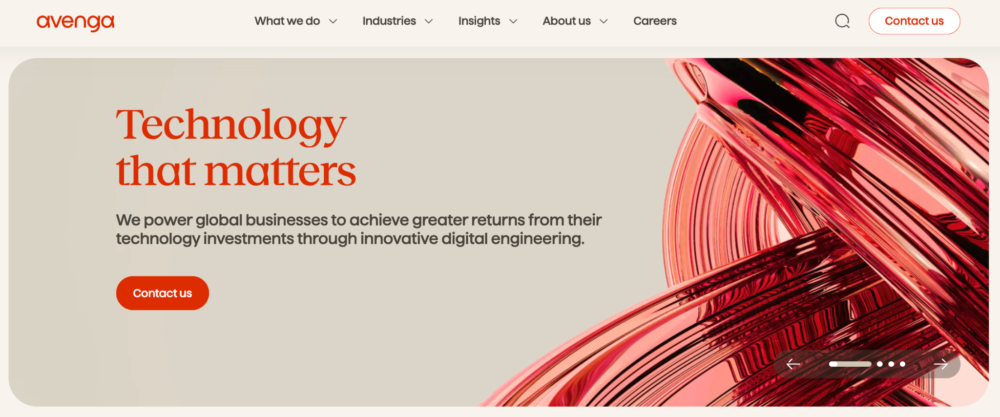
Avenga`s AI-driven software development services approach AI-enabled software delivery through full SDLC transformation rather than isolated engineering acceleration.
That distinction matters because many delivery bottlenecks exist outside development itself.
Requirements drift between teams. Architecture decisions lose consistency across releases. QA cycles become increasingly difficult to scale. Incident resolution slows because operational history remains fragmented across systems. Delivery coordination breaks down as engineering ecosystems expand.
Avenga’s AI-driven software development company model focuses heavily on embedding AI throughout those operational layers.
The company supports AI integration across:
- Project scoping and estimation
- Requirements engineering
- UX and product design
- Architecture workflows
- Engineering execution
- QA operations
- DevSecOps coordination
- Incident response systems
One especially interesting area is architecture governance.
Many organizations still treat architecture reviews as highly manual processes dependent on institutional knowledge and fragmented documentation. Avenga integrates AI into architecture analysis workflows to improve consistency, visibility, and engineering coordination as systems scale.
Another strong differentiator is AI-assisted QA orchestration.
The company uses AI to generate testing scenarios directly from requirements while helping engineering teams prioritize the tests most likely to matter operationally. That creates faster validation cycles without turning QA into a delivery bottleneck.
Avenga also structures AI around role-specific operational workflows. Instead of introducing generic assistants disconnected from engineering environments, product managers, architects, QA engineers, developers, and DevSecOps teams work with AI systems aligned to their own workflow context.
That creates much more continuity across delivery operations. The company combines this AI-native SDLC model with broader modernization expertise involving enterprise platform engineering, cloud infrastructure transformation, operational scalability, and governance-heavy software delivery ecosystems.
2. N-iX
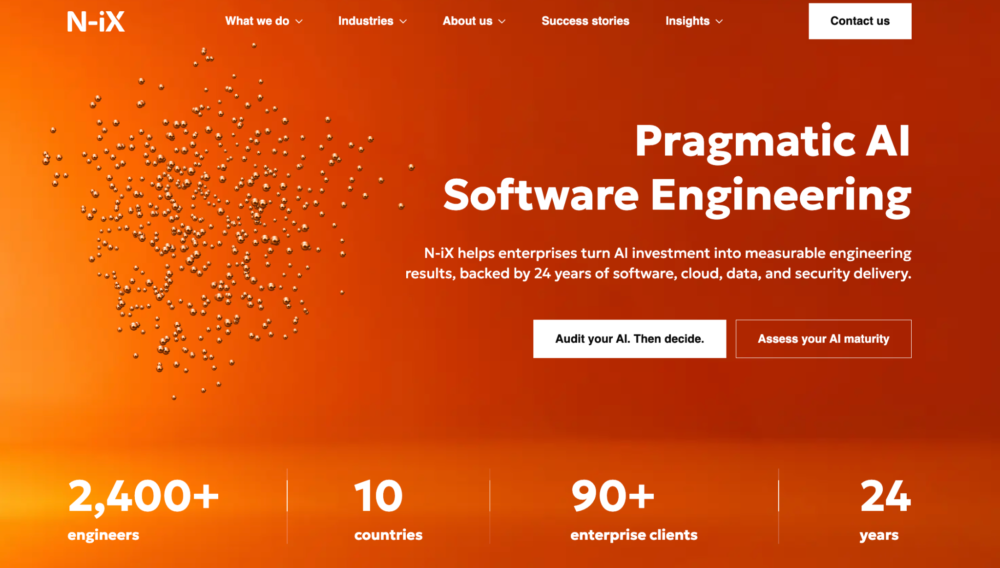
N-iX has expanded its AI engineering capabilities significantly across enterprise software modernization and AI-enhanced delivery ecosystems.
The company works with organizations embedding AI systems into cloud-native engineering environments and distributed software operations.
Capabilities include:
- AI engineering
- Workflow automation
- SDLC modernization
- Cloud-native delivery systems
- Enterprise product development
- Data engineering
N-iX is especially relevant for organizations integrating AI into broader software delivery ecosystems instead of isolated development tooling.
One noticeable strength is infrastructure coordination. AI-assisted engineering environments often require synchronization between delivery pipelines, testing systems, cloud platforms, DevOps operations, and governance environments simultaneously. N-iX supports those implementation ecosystems particularly well.
The company also works heavily across modernization initiatives involving scalable product delivery operations and distributed engineering environments.
3. SoftServe
SoftServe has invested heavily in AI-enhanced engineering operations and enterprise delivery modernization initiatives.
The company supports organizations embedding AI into software engineering ecosystems involving cloud-native infrastructure, analytics systems, and distributed product teams.
Capabilities include:
- AI-driven engineering
- Enterprise AI implementation
- QA automation
- Workflow modernization
- Cloud-native delivery systems
- Data and analytics engineering
SoftServe is frequently evaluated by enterprises modernizing large operational engineering ecosystems where AI adoption intersects with broader transformation initiatives.
One reason organizations evaluate the company is its delivery scale. AI-enhanced SDLC initiatives often expand rapidly across engineering squads, governance environments, testing operations, and infrastructure systems simultaneously. SoftServe supports those larger implementation ecosystems effectively.
The company also brings broader modernization expertise involving analytics transformation, operational redesign, and cloud engineering environments connected to enterprise software delivery.
4. Intellias
Intellias has expanded its AI engineering capabilities significantly across enterprise product engineering and operational modernization environments.
The company supports organizations embedding AI systems into distributed delivery ecosystems involving cloud-native infrastructure and enterprise-scale engineering operations.
Capabilities include:
- AI-assisted engineering
- Product delivery optimization
- Workflow automation
- Enterprise platform engineering
- Cloud-native systems
- Data infrastructure
Intellias is especially relevant for enterprises combining AI adoption with broader engineering transformation initiatives.
One major strength is operational systems integration. AI-native delivery environments eventually need to interact with architecture governance, QA pipelines, infrastructure systems, DevOps operations, and enterprise engineering workflows simultaneously. Intellias supports those integration-heavy ecosystems effectively.
The company also works across modernization initiatives involving cloud transformation and platform engineering.
5. Itransition
Itransition focuses heavily on enterprise software engineering and operational transformation projects involving AI-supported delivery systems.
The company works with organizations integrating AI capabilities into broader SDLC environments requiring scalable infrastructure and engineering coordination.
Capabilities include:
- AI-assisted software engineering
- Enterprise platform modernization
- QA optimization
- Workflow automation
- Cloud engineering
- DevOps support
Itransition is especially relevant for enterprises operationalizing AI inside existing software delivery ecosystems rather than building disconnected experimentation environments.
A strong advantage is architectural adaptability. Enterprise SDLC modernization usually requires coordination across APIs, governance systems, infrastructure layers, testing workflows, and distributed engineering operations simultaneously. Itransition’s broader engineering background helps support those implementation ecosystems effectively.
The company also supports modernization initiatives involving operational scalability and infrastructure redesign.
6. ELEKS
ELEKS focuses heavily on enterprise technology consulting and AI-enhanced engineering transformation projects.
The company supports organizations embedding AI capabilities across software delivery operations and enterprise engineering workflows.
Capabilities include:
- AI-driven development
- Workflow automation
- Enterprise engineering modernization
- QA transformation
- Cloud engineering
- Platform engineering
ELEKS is frequently evaluated by enterprises looking for consulting depth combined with implementation capability across operationally demanding engineering ecosystems.
Its broader engineering background becomes especially valuable once AI adoption expands beyond experimentation into production-scale SDLC environments involving governance coordination and infrastructure complexity.
The company also supports modernization programs involving enterprise architecture and cloud-native infrastructure.
7. Sigma Software
Sigma Software supports enterprise AI engineering and AI-enhanced software delivery initiatives involving distributed operational ecosystems.
The company works with organizations deploying AI capabilities across engineering workflows, product delivery systems, and modernization environments.
Capabilities include:
- AI-assisted development
- Enterprise software engineering
- Workflow automation
- Cloud engineering
- Product delivery modernization
- Operational transformation initiatives
Sigma Software is especially relevant for organizations operationalizing AI inside larger engineering and delivery ecosystems.
Its experience across distributed software systems and enterprise operational environments becomes increasingly valuable once AI adoption expands beyond isolated coding assistance workflows.
The company also supports modernization efforts involving platform transformation, engineering productivity, and infrastructure scalability.
Software delivery is becoming more context-aware
One of the more important changes happening right now is contextual continuity across the SDLC.
Historically, engineering workflows lost context constantly between delivery stages.
Requirements did not always translate cleanly into implementation. Architecture documentation drifted away from production systems. QA workflows became disconnected from operational priorities. Incident response teams lacked historical engineering visibility once problems surfaced in production.
AI is starting to reconnect those layers. Requirements increasingly feed testing systems automatically. Architecture analysis becomes more traceable. Delivery workflows gain operational memory. QA prioritization becomes more adaptive. Incident response systems surface historical engineering context immediately instead of relying entirely on manual investigation.
That creates a fundamentally different software delivery environment.
The organizations moving fastest right now are usually not the ones adopting the most AI tools individually. They are the ones embedding AI into the connective tissue between engineering workflows across the entire SDLC.
That shift is much larger than coding acceleration alone because it changes how engineering operations function structurally over time.