Most self-improvement efforts fail. You start a long course, get overwhelmed by the time commitment, and lose momentum. Information isn’t the problem. The format is. True microlearning works only when structure and repetition are baked into the system. It’s about daily nudges, not monthly binges. The apps below solve this in different ways. Some are strict coaches. Others are inspiring libraries. Your success hinges on picking the engine that matches your personal wiring.
What Separates Real Skill-Building Apps from Content Libraries
A content library asks for your time. A skill-building system engineers your habits. The difference is in the architecture. The best platforms don’t just deliver lessons; they create a container for daily practice. They bridge the knowing-doing gap with built-in prompts for action. Effective tools feel less like a bookstore and more like a gym. You go there to train. The most effective platforms usually share these traits:
- Short sessions that fit daily routines;
- Clear paths instead of random content;
- Built-in prompts for real-world action;
- Knowledge sourced from credible experts;
- Designed for consistency, not binge use.
Forget about volume. A good app is judged by its ability to make you act consistently. That’s the real filter.
1. RiseGuide
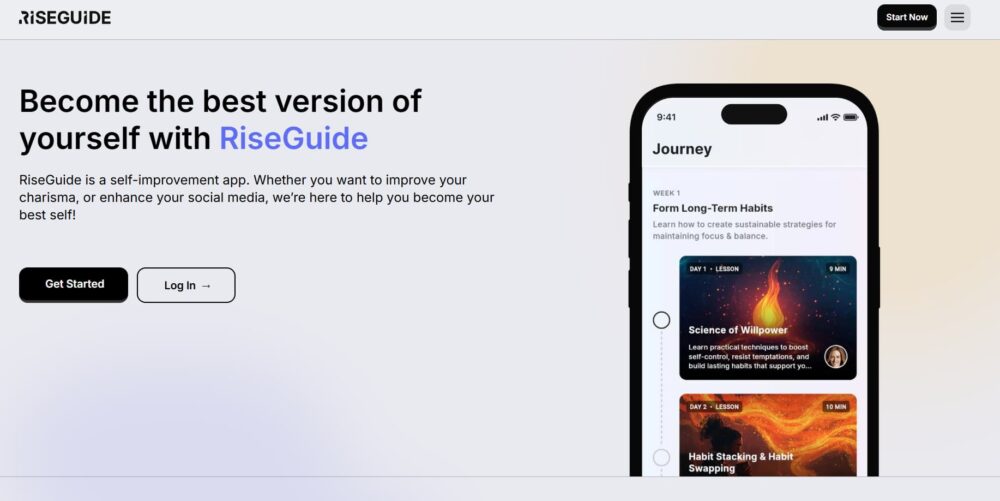
RiseGuide isn’t a content platform. It’s a practice system. The core idea is that development happens through small, repeated actions, not theoretical deep dives. It organizes learning into structured paths like communication or confidence. Each day delivers a single, bite-sized lesson focused on a practical framework. The rhythm is the product. You show up, you do the small task, you log out. It turns abstract self-improvement into a daily operational habit.
Features That Support Consistent Skill Growth
The app is built to convert intention into routine action. It provides the scaffolding so you don’t have to build it yourself. Every feature pushes toward doing, not just consuming. This practical bias is what makes it stick for skill development. You can see this action-first design reflected in several core elements:
- Short daily lessons built for routine use;
- Practical models sourced from expert insights;
- On-demand search for trusted expert knowledge;
- Action-focused tools that push real practice;
- Multiple learning paths across skill areas.
The focus is squarely on repetition and practice. It’s for people who are done with inspiration and ready for a little bit of daily work.
What to Expect From the Learning Pace
Honestly, you need to manage expectations. The system requires your regular input to function. Progress is incremental, sometimes frustratingly slow. You won’t feel transformed in a week. The initial setup, choosing your paths, can feel like a lot of upfront work. And the content, while structured, isn’t magically tailored to your every fleeting mood. Some lessons will hit perfectly. Others might feel generic. That’s the trade-off for a system that works at scale. It’s a marathon tool, not a sprint.
2. MasterClass
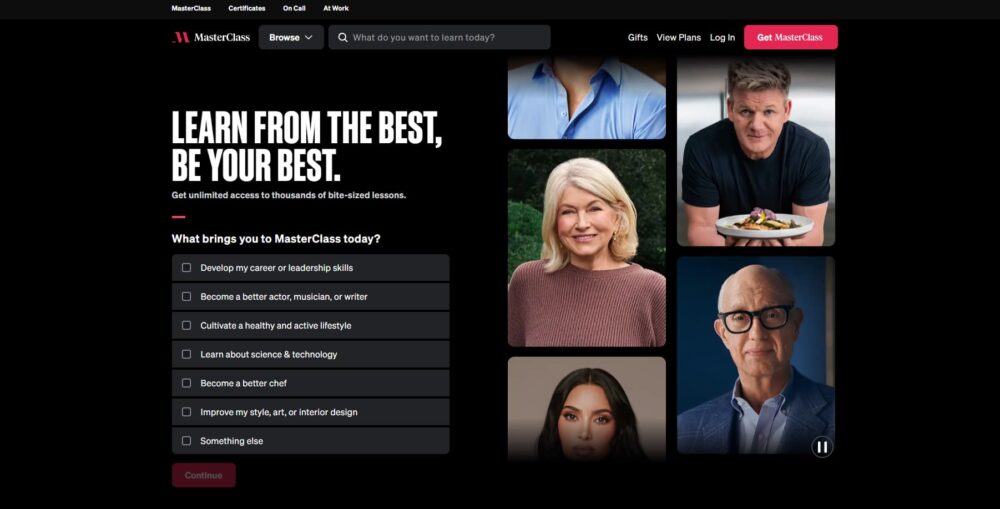
MasterClass offers a different value proposition: learning through narrative and prestige. The format is high-production video lessons taught by renowned experts. Think of it as a documentary series with educational aims. You’re there to absorb the stories, mindsets, and processes of people at the pinnacle of their fields. The experience is cinematic, polished, and fundamentally observational.
Strengths That Make It Stand Out for Learners
Its advantages are unique in the learning space. The platform leverages fame and production quality to create an engaging, almost aspirational experience. It’s less about drilling a skill and more about expanding your perspective on what’s possible. That positioning shows up clearly in the platform’s defining strengths:
- Lessons taught by famous experts;
- Cinematic, high-production video format;
- Wide range of professional fields;
- Flexible watch-at-your-own-pace model;
- Strong focus on inspiration.
You get access to world-class thinking. The production value alone makes the consumption enjoyable.
Where This Format Feels Less Practical
The gap is in translation. MasterClass excels at showing you the “what” and the “why” from a master. It rarely provides the “how” in a systematic, practice-ready way. There are no built-in exercises, no habit trackers, no feedback loops. The leap from watching a Gordon Ramsay lesson to competently chopping an onion is yours to make entirely. It’s a phenomenal library, but it leaves the training regimen up to you.
3. Mindvalley
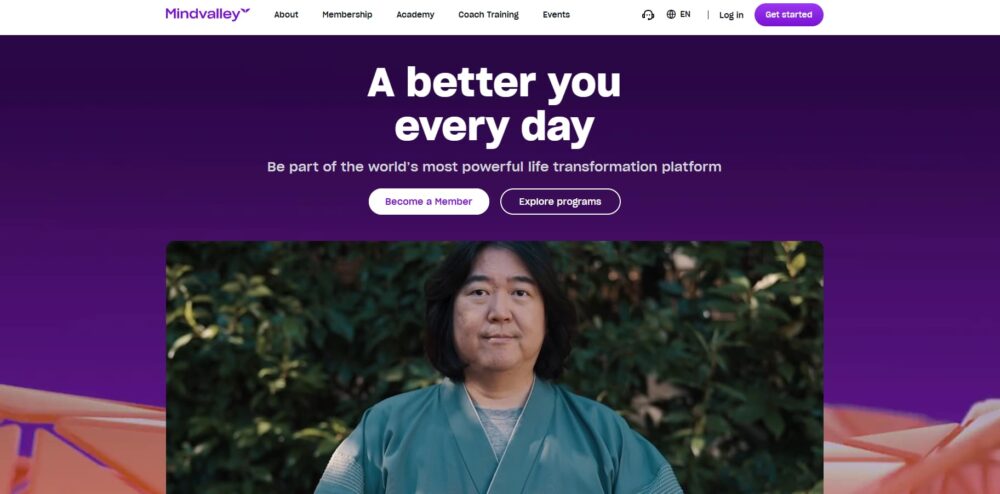
Mindvalley structures learning as immersive journeys called Quests. These are multi-week programs that blend video lessons, daily tasks, and community interaction. It’s deeper than microlearning. Sessions are longer, demanding more focus and time. The platform leans heavily into holistic themes: mindset, wellness, spirituality alongside more concrete skills. It’s for people seeking transformation, not just a quick tip.
Platform Advantages for Deep Personal Development
The strength here is depth and support. You’re not taking a single lesson; you’re committing to a guided program with a clear narrative arc. The community aspect provides a layer of accountability and shared experience that pure apps lack. This immersive model is supported by several key platform features:
- Guided multi-week learning programs;
- Community-driven accountability;
- Emphasis on mindset and wellness;
- Daily tasks within structured journeys;
- Broad personal growth themes.
It’s designed for a learner who wants to live inside a topic for a while.
Why It Feels Different from Microlearning Apps
Frankly, it often isn’t micro. The daily time investment is larger, sometimes 20-30 minutes per session. This makes it less suitable for someone who literally only has five spare minutes. The format is more intensive, more immersive. It’s a different category. You don’t snack on Mindvalley; you sit down for a full meal.
4. Studio
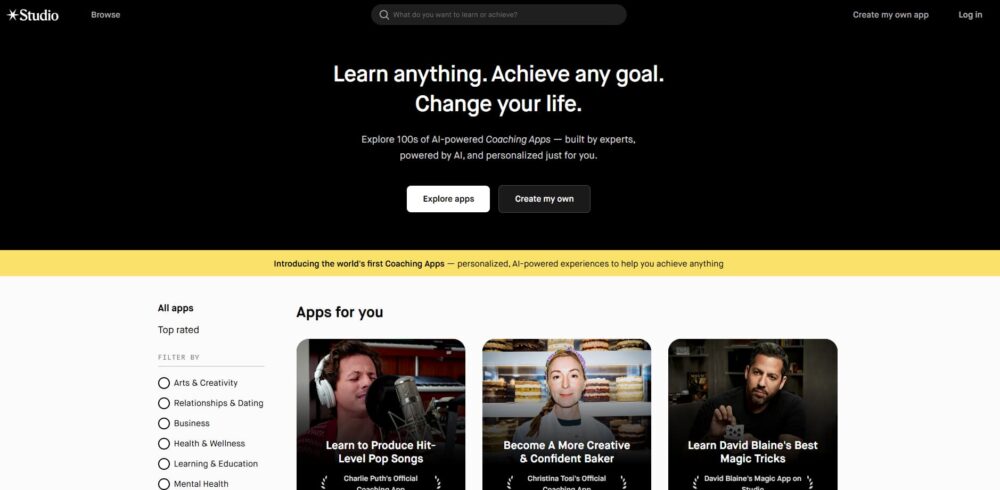
Studio operates like a digital coach. You start with a specific goal—learn a language, improve fitness, build a habit. The app then generates a personalized plan with daily and weekly tasks. The entire experience revolves around this plan, with tracking and progress monitoring at its center. It’s highly prescriptive, removing the ambiguity of “what to do next.”
Practical Features That Support Habit Formation
The toolset is built for goal attainment. Every feature serves the master plan, creating a clear line of sight from your daily action to the long-term outcome. This focus can be incredibly effective for linear progress. You can see this structured philosophy in the following tools:
- Structured plans tied to specific goals;
- Habit tracking and progress monitoring;
- Personalized daily routine guidance;
- Milestone and streak tracking;
- Coaching-style digital support.
It holds you accountable by making your progress or lack of it visually explicit.
Situations Where It May Feel Limiting
This rigorous focus is also its constraint. Studio is less a playground for exploration. If your goal is to browse and discover new topics loosely, the app can feel restrictive. It works best when you have a single, clear target in mind. Wandering curiosity isn’t really part of the design. It’s a specialist tool for focused projects.
5. Blinkist
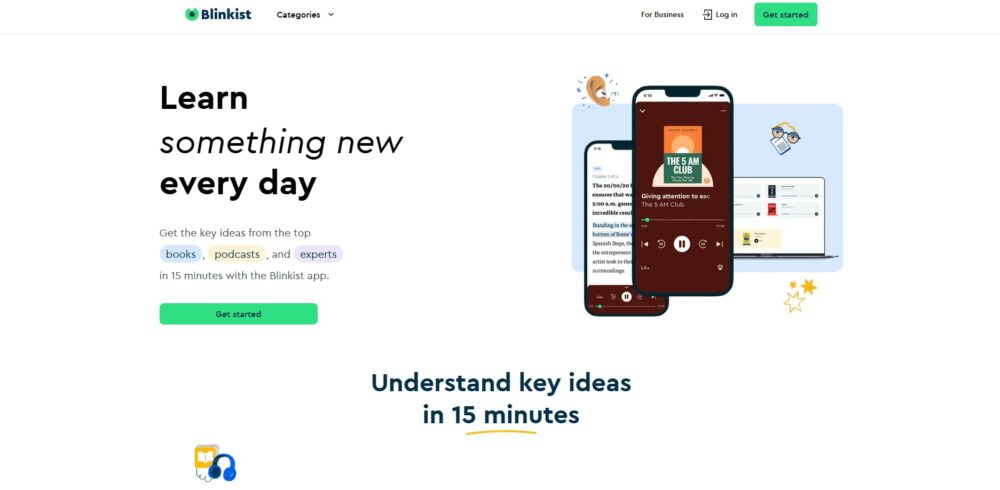
Blinkist condenses non-fiction books into 15-minute summaries called Blinks. Available in text and audio, the service is built for speed and efficiency. You get the core arguments, stories, and takeaways from a book without reading the full 300 pages. It’s a tool for knowledge acquisition, pure and simple.
Reasons It Works Well for Busy Learners
For the perpetually time-crunched, it’s a lifesaver. It turns a commute or a coffee break into a learning session. The breadth is staggering, covering business, psychology, history, and more. This efficiency comes from a few defining product characteristics:
- Short summaries of non-fiction books;
- Audio and text learning options;
- Covers business, psychology, self-growth;
- Easy to use during commutes;
- Helps preview books before reading.
It’s incredibly efficient for staying broadly informed.
Why It’s More About Ideas Than Practice
And that’s the boundary. Blinkist gives you knowledge, not skill. You’ll understand a concept from a book on negotiation, but you won’t practice a single dialogue. There is no system for implementation, no exercises, no feedback. It’s a lecture in a capsule. A brilliant one, but it ends when the summary does.
6. Headway
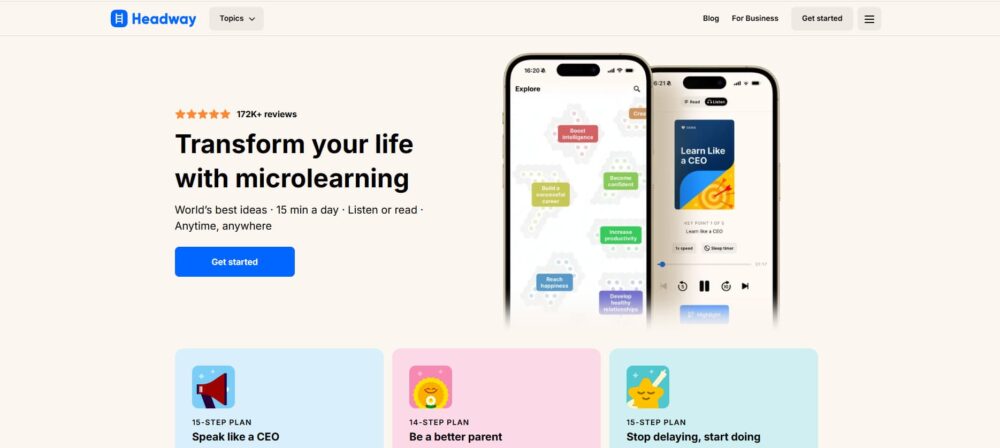
Headway is similar to Blinkist but often skews more toward motivational and self-growth topics. It offers short, digestible summaries of popular non-fiction books, with a strong emphasis on daily “insights” and gamified challenges. The vibe is upbeat, designed to deliver a quick dose of inspiration or a useful idea in just a few minutes.
Benefits for Users Seeking Quick Inspiration
It’s built for the learner who wants a positive, frictionless start to their day. The app is mobile-friendly, and the content is curated to feel immediately applicable or uplifting. This lightweight format is built around several simple strengths:
- Short motivational book summaries;
- Focus on self-growth topics;
- Designed for daily quick sessions;
- Mobile-friendly microlearning style;
- Strong emphasis on inspiration.
It’s well-suited for a quick mental boost when you need a small push of motivation. Just keep in mind that the format focuses more on inspiration than on structured skill practice.
Where Depth and Skill Practice Are Limited
Naturally, this comes with compromises. The summaries are, by design, superficial. Complex arguments are simplified. Nuance is lost. And like its counterparts, Headway provides zero infrastructure for turning an insight into a practiced skill. It’s a source of ideas, not a workshop for building ability. The depth just isn’t there.
7. Imprint
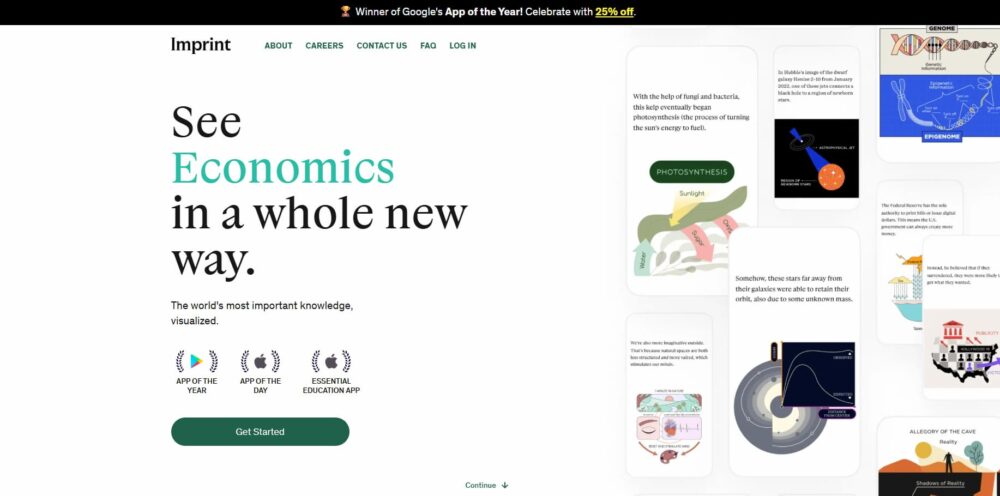
Imprint explains complex ideas through visual design. It takes concepts from economics, psychology, or science and breaks them into elegant, card-based explanations. The learning is visual and spatial, leveraging design to aid comprehension and memory. Sessions are short, beautiful, and focused on making a single idea stick.
Platform Strengths for Memory and Comprehension
For visual learners, it’s a game-changer. The format can make a thorny concept click in a way text alone cannot. It’s particularly strong for building mental models and reviewing fundamentals. Its design advantages become clear in the way the learning experience is structured:
- Visual breakdown of complex ideas;
- Card-based bite-sized format;
- Designed for stronger retention;
- Short, visually guided sessions;
- Helpful for reviewing key concepts.
It makes learning feel effortless and fast, especially when you’re trying to grasp or revisit a complex idea. The visual structure helps information stick without demanding long sessions.
Why It’s Not a Skill-Building System
Its purpose is singular: understanding. Imprint will help you grasp the theory of cognitive biases vividly. It will not provide a daily exercise to catch your own biases in action. There’s no practice loop, no application framework. It’s a brilliant explainer tool, but it exists entirely upstream of skill acquisition. You walk away knowing, not doing.
Choosing the Right Format for Your Personal Growth Style
So how do you pick? According to our data, it hinges on your goal’s nature. If you need to build a habit or a hard skill, you require structure and repetition. Look to systems like Riseguide or Studio. If your aim is inspiration or expanding your mental models, content libraries like MasterClass or Blinkist are powerful.
For deep, holistic dives, Mindvalley’s programmatic approach fits. Visual learners grappling with concepts might prefer Imprint. Be brutally honest about what you’ll maintain daily. The perfect app you abandon is useless.
Conclusion
The big insight is simple. Consistency trumps intensity every single time in skill development. A two-minute daily practice in a well-designed system creates more progress than a two-hour monthly learning binge. The right app is the one that makes that daily two minutes inevitable.
It removes friction, provides the next step, and maybe even makes it mildly enjoyable. Don’t overthink the content breadth or the celebrity instructors. Focus on the engine. Will this tool get me to act, today and tomorrow? That’s the only question that truly matters. Pick based on that, and you might actually build something.