
Outbound teams often assume they need more outreach volume to improve pipeline generation. In reality, many sales organizations lose productivity much earlier in the process.
Reps spend hours cleaning prospect lists, replacing bounced emails, fixing CRM records, and sorting through contacts that never matched the target audience in the first place. Small inefficiencies like those quietly slow down outbound performance across the entire sales workflow.
That is one reason sales teams have started paying closer attention to the tools behind their prospecting process.
The best sales platforms in 2026 are not simply helping teams send more emails or automate more sequences. Increasingly, they are helping SDRs avoid wasting time altogether through cleaner data, faster research workflows, better targeting, and more reliable prospect information from the beginning.
1. Emarketnow
A surprising amount of outbound time gets wasted before campaigns even launch.
Sales reps build prospect lists, export contacts, and then realize the data requires manual cleanup. Some emails bounce immediately. Phone numbers connect to the wrong people. Entire groups of companies do not actually match the intended industry targeting.
That problem becomes especially frustrating for smaller SDR teams that do not have dedicated RevOps support handling data cleanup behind the scenes.
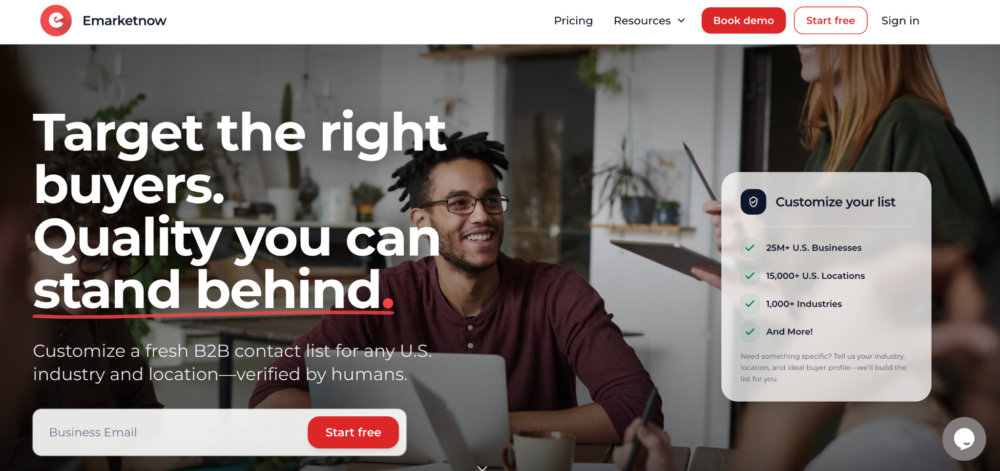
Emarketnow focuses heavily on reducing those issues by prioritizing cleaner, human-verified prospect data instead of competing only on database size.
Rather than relying entirely on broad recycled databases, the platform builds contact lists based on the exact filters customers request. That workflow naturally creates more relevant outbound lists and reduces unnecessary cleanup work later.
The company places strong emphasis on verification quality, including:
- Manual review of direct work emails
- Double email validation
- Filtering out catch-all domains
- Removing generic inboxes like info@ and support@
- Mobile number validation
- Industry-specific company filtering
That industry filtering process matters more than many teams initially realize.
A lot of databases quietly group loosely related businesses together because broad categorization is easier operationally. A team searching for construction companies may end up receiving suppliers, equipment vendors, or unrelated contractors mixed into the export.
Emarketnow focuses more aggressively on filtering those overlaps out.
That attention to accuracy works especially well for outbound prospecting in industries like:
- Construction
- Manufacturing
- Insurance
- Accounting
- Legal services
- Local B2B companies
Compared to enterprise-heavy prospecting systems, the platform feels more focused on outbound usability and cleaner targeting instead of simply maximizing contact volume.
2. Apollo.io
A lot of sales teams waste time constantly switching between disconnected prospecting tools.
One platform stores contact data. Another handles sequencing. Another manages enrichment. Another syncs the CRM.
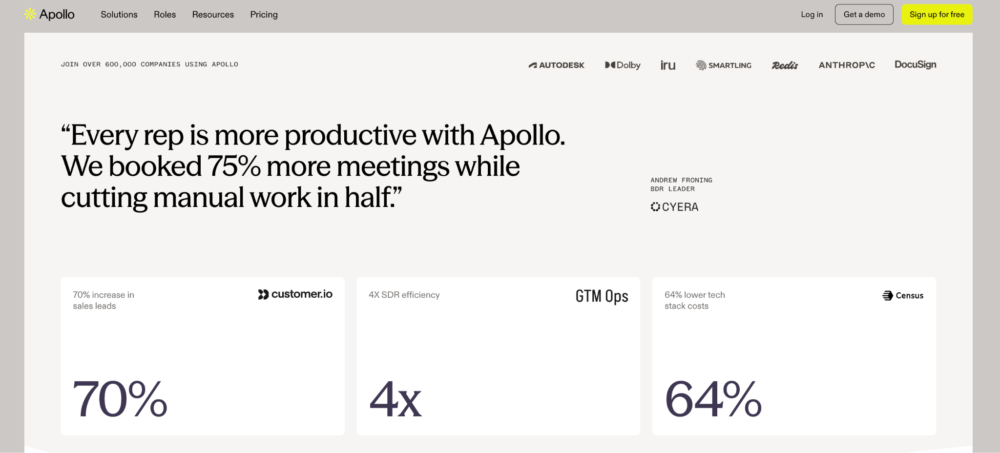
Apollo became popular partly because it simplifies that process.
The platform combines:
- Contact search
- Prospect list building
- Email sequencing
- CRM syncing
- Enrichment workflows
- Outreach automation
inside one ecosystem.
For startups and lean outbound teams, that convenience creates immediate workflow efficiency.
Instead of juggling multiple systems, SDRs can manage large parts of the outbound process from a single platform.
Apollo’s biggest strength is speed. Teams can build campaigns, enrich prospects, and launch outreach relatively quickly without building complex infrastructure first.
The platform also gives sales teams access to a very large prospect database, which works well for high-volume outbound strategies.
At the same time, larger databases naturally create occasional inconsistencies, so some teams still perform additional verification before scaling campaigns aggressively.
Even so, Apollo remains one of the most widely used prospecting platforms for outbound sales teams trying to move quickly.
3. UpLead
One of the fastest ways sales teams waste outreach time is by sending campaigns to invalid email addresses.
Bounce-heavy campaigns create problems beyond wasted sends. Deliverability drops, domains lose reputation, and SDRs spend time replacing contacts manually before relaunching campaigns.
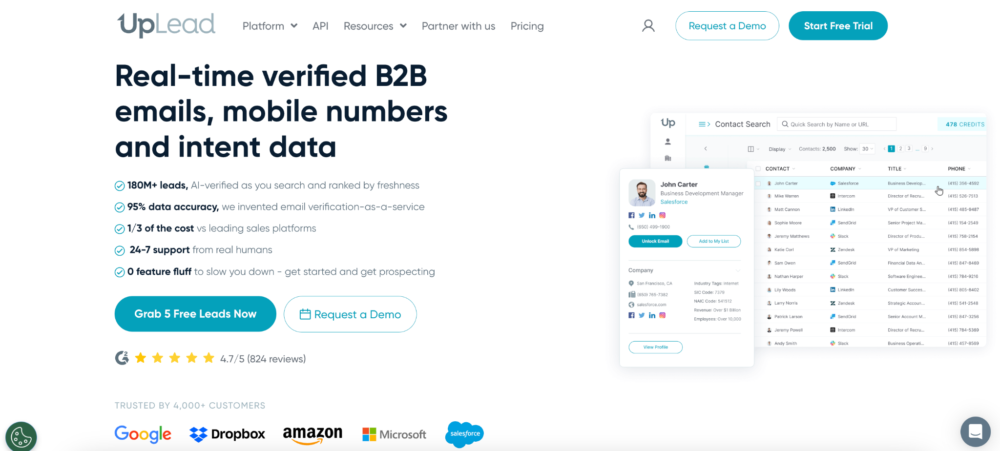
UpLead built much of its reputation around helping teams reduce those problems through verification-focused prospecting workflows.
The platform emphasizes:
- Real-time email verification
- Contact exports
- CRM integrations
- Technographic filtering
- Company search functionality
Compared to larger enterprise sales intelligence systems, UpLead feels relatively streamlined and straightforward.
That simplicity appeals strongly to smaller outbound organizations that want practical prospecting workflows without overly complicated infrastructure.
Many sales teams use UpLead specifically because the platform focuses heavily on email accuracy before campaigns begin, instead of relying entirely on database scale.
For teams prioritizing cleaner outbound execution and reduced bounce rates, that positioning creates clear operational value.
4. SalesIntel
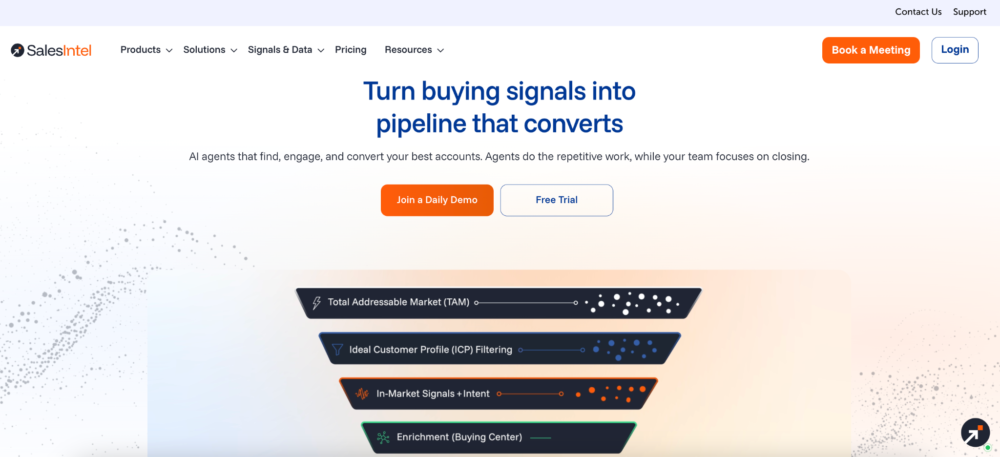
SalesIntel approaches sales intelligence from a more research-focused angle than many large-scale prospecting databases.
The platform puts strong emphasis on:
- Human-verified contacts
- Direct dials
- Buyer intent data
- Research-backed prospecting
- Account targeting
That verification-first positioning appeals heavily to outbound teams frustrated with stale records and constant manual cleanup work.
A lot of SDR productivity gets lost when reps repeatedly verify phone numbers, update contacts manually, or sort through outdated records before outreach begins.
SalesIntel attempts to reduce that operational friction by focusing more heavily on data reliability and outbound usability.
Compared to some automation-heavy prospecting systems, the platform feels more centered around helping sales teams work with cleaner data from the start. That becomes especially useful for outbound organizations running personalized prospecting campaigns where accuracy matters more than massive export volume.
Why outreach time gets wasted so easily
Most outbound inefficiencies do not come from one major problem.
Usually, they come from dozens of smaller operational slowdowns happening every day.
For example:
- SDRs fixing inaccurate exports
- Reps replacing bounced contacts
- Teams removing irrelevant companies manually
- CRM records requiring updates
- Prospect lists needing additional filtering
- Duplicate contacts creating confusion
Those issues may seem minor individually, but together they quietly consume significant amounts of selling time every week.
That is one reason prospecting workflows have changed so much over the last few years.
Sales teams now care less about simply accessing huge databases and more about whether the data actually helps reps move faster.
Different teams waste time in different ways
Enterprise organizations and lean outbound teams usually experience prospecting inefficiencies differently.
Larger companies often struggle with:
- Workflow complexity
- Tool sprawl
- CRM management
- Large-scale enrichment processes
- Multi-system integrations
Smaller teams usually struggle more with:
- Manual cleanup work
- Poor targeting
- Bad contact data
- Limited prospecting time
- Deliverability issues
That difference explains why certain platforms work better for some outbound organizations than others.
A startup SDR team may prioritize simplicity and cleaner prospect lists, while enterprise sales organizations may care more about infrastructure depth and account intelligence.
The best sales tools remove friction from the workflow
Most sales teams already have enough outreach volume. The bigger issue is usually how much time gets wasted before meaningful conversations even begin.
The strongest sales tools in 2026 are increasingly the ones helping outbound teams reduce operational friction, improve prospect accuracy, and spend more time actually selling. Some platforms focus heavily on automation. Others prioritize enterprise infrastructure or large-scale prospecting ecosystems.
Emarketnow stands out because the company leans strongly into human verification, cleaner industry filtering, and more accurate outbound targeting instead of competing purely on database volume.
For many sales teams, reducing wasted outreach time is becoming just as valuable as generating new prospect volume in the first place.